Replacing a roof for the first time feels bigger than it looks on paper. It is money up front, noise over your head, strangers on scaffolding, and a short window to make decisions you will live with for decades. After years up ladders across Norfolk, from terraced homes off Unthank Road to farmhouses near Aylsham, I have learned that a good roof replacement is less about flashy materials and more about planning, honest assessment, and tidy execution. This guide walks you through the process the way a working roofer would explain it on a site visit, with examples that reflect the quirks of our weather, housing stock, and planning rules.
How to know it is time
Roofs rarely fail all at once. They nag. You see a few slipped tiles after a blowy night off the Broads, a stain on the ceiling after a squall, grit from ageing shingles washing into the gutters, or moss spreading in the shade of a chimney. Small, isolated leaks can often be repaired. A replacement becomes sensible when issues repeat across the roof or when the roof layer has reached the end of its service life. As a rule of thumb, concrete interlocking tiles tend to last 40 to 60 years, plain clay tiles can go 70 years or more, natural slate often exceeds a century if fixings remain sound, and fibrous cement sheets on outbuildings vary widely depending on exposure and maintenance. If your house in Norwich was reroofed in the 1980s with concrete tiles and you are now patching it every winter, planning a full replacement will likely save money over five to ten years compared to constant callouts.
In Norfolk, wind uplift and driving rain reveal weaknesses faster than gentle weather does. I often see felt underlay from the 1960s and 1970s turned brittle, torn around nail lines, and sagging between rafters. Condensation is another silent culprit in tightly sealed lofts, especially after insulation upgrades without improved ventilation. When you see blackened felt, rusty nails, and a musty smell in the loft, the envelope is struggling. On the outside, multiple slipped tiles, pronounced tile cupping, chronic moss that lifts laps, or crumbling ridge mortar across the length of the roof point to a broader problem. A roof is a system, not a patchwork. When the system fails in many places, a replacement brings back cohesion.
First conversations and getting like-for-like quotes
The most useful call you can make early on is to a local roofer who actually climbs up for a look. A ground-only quote based on a photo tends to miss the expensive bits: rotten valley boards, undersized battens, soft rafters under old leaks, or leadwork split at the back of a chimney. Roofers in Norfolk, including firms like Norwich & Norfolk Roofers, generally offer a site visit and written estimate at no charge. Insist on a quote that breaks out key components rather than a single lump sum. This ensures you can compare like with like.
Ask for quantities and specifications. How many square metres of roof area are they pricing? Which tile or slate model, colour, and weight? Batten size and grade? Underlay type and vapour permeability? Eaves ventilation detail? Ridge system: dry ridge with mechanical fixings or mortar bedded? Lead codes at flashings? Scaffold inclusions and who arranges permits if the pavement is partially occupied?
Two quotes at very different price points usually hide differences in scope. One roofer might propose reusing old leadwork and mortar bedding, while another includes new code 4 lead and a dry ridge system. One may include upgrading insulation at the eaves or adding eaves support trays, vital for stopping felt sag that ponds water. Those details matter, especially in rain-driven corners of Norfolk.
The best conversations feel like a walk-through with a teacher, not a salesperson. If someone cannot explain why they spec a certain membrane or how they will protect the garden while stripping, keep looking.
Planning, building control, and conservation realities
Most straightforward re-roofing in Norfolk does not require planning permission if the finished look is similar to what you have. That said, there are exceptions. Listed buildings, properties in conservation areas, and changes that significantly alter appearance or height can trigger permission. Areas around Elm Hill, the Norwich Cathedral precinct, and many market-town centres have stricter rules. A quick check with your local planning authority saves headaches later. A reputable contractor should know the local twists and can point you toward pre-application advice if needed.
Building regulations are more routine. Re-roofing beyond a small repair triggers Part L considerations for thermal performance, as well as requirements for ventilation and structural click here loading. In practical terms, this usually means your roofer will assess existing insulation and advise whether a top-up is needed to meet current standards. Many households opt to add mineral wool in the loft at the same time, since the roof will be open at eaves and small adjustments are easier. The loading point is crucial if you are switching from light concrete tiles to heavy clay or natural slate. We sometimes ask a structural engineer to confirm that older rafters and purlins can take the weight. Building control notification can be handled by a Competent Roofer scheme member who self-certifies, or via the council. Ask which route your contractor uses and confirm that you will receive a certificate upon completion, since you will need it if you sell.
Choosing materials for Norfolk weather and architecture
Norfolk’s winds and salt-laced air near the coast put pressure on fixings and weak laps. It is not about buying the most expensive option, it is about choosing a system that holds together.
Clay tile suits many Victorian and interwar Norwich homes, providing a deep finish that ages gracefully. Modern clay tiles are consistent and come in colours that harmonise with older stock. Concrete interlocking tiles offer solid value and rapid installation. They shed water well and create a robust roof when fixed to current standards. Natural slate remains the gold standard where budget allows, with longevity and character. Fibre-cement slate gives the look at a lower price, though lifespan is shorter and edges can weather differently.
Underlays have changed since the old bituminous felts that trapped moisture. Today I prefer a breathable membrane paired with controlled ventilation. Purely relying on a membrane’s vapour permeability without vents can invite condensation in still winter air. Eaves vents, ridge ventilation, and uninterrupted air paths over insulation make the whole assembly behave. For ridges and hips, mechanically fixed dry systems reduce maintenance. Mortar bedding looks traditional, but we see it fail after freeze-thaw cycles and strong winds. Dry systems lock ridges in place and allow under-ridge airflow.
Leadwork remains the best choice at abutments, chimneys, and dormers. Code 4 is common for flashings, code 5 for soakers and larger pieces where movement and longevity matter. On seaside jobs from Cromer to Winterton, I sometimes increase code thickness or adjust detailing to cope with gusts. Remember that lead is a long-term investment. When it is correctly dressed and fixed with allowance for expansion, it easily outlasts the roof covering.
Fixing specification is not a detail to gloss over. Nail lengths, corrosion resistance, and the number of fixings per tile line up with wind zones. Norwich sits in a zone that justifies extra care. I have seen roofs in Costessey lose ridge tiles in the first big blow after a quick replacement with skimpy fixings. The small choices about nails, clips, and batten gauges are the difference between a tidy roof and a recurring problem.
What a proper survey looks like
On a first visit, a competent roofer will do more than take pictures. We check the loft for daylight through nail holes, water trails, and signs of rot at the rafter feet. Outside, we note tile types, see whether the battens look undersized or soft at cuts, and examine flashings and valleys. Chimneys get special attention because they combine masonry, heat, and water. A hairline crack in a lead back gutter may not drip every day, but it can dump water in heavy rain.
For older terraces in Norwich, party walls and shared chimney stacks matter. If your tiles tuck into a neighbour’s, your roofer must plan the detail at the junction so you do not create a weak spot or boundary dispute. On farmhouses, long roof runs exaggerate any slight sag in rafters. We sometimes plan in additional counter battens to even the plane and improve drainage without rebuilding the structure.
Expect a few photos and a plain-english explanation after the survey. If you feel rushed or talked down to, take a breath and get a second opinion. Good roofers want you to understand what you are buying.
The timeline and what happens on site
Once you accept a quote, your roofer books scaffolding, orders materials, and sets a start date. Lead times vary with season. Spring and early autumn are popular and can fill up a calendar weeks in advance. Weather shapes everything. In Norfolk, we watch the forecast for multi-day dry spells. Most replacements last 3 to 7 working days for an average semi-detached, longer for larger or complex roofs. That range shifts with surprises, and old roofs always hide something.
On day one, scaffolding goes up with edge protection and a lift to bring materials to roof height. Good crews lay debris netting and polythene sheets to protect conservatories and flower beds. Neighbours appreciate a heads-up, especially on narrow streets where delivery lorries may block the road briefly. Removal begins at the ridge and works down the slopes. A steady team strips tiles or slates, collects salvage if you are reusing any, and exposes the battens and underlay. At this point you learn the truth of your roof.
If the battens crumble in hand, they go. If the rafters feel springy at the ends, we probe with a screwdriver to check for rot. Minor end repairs are routine and do not blow up a schedule. Deeper structural issues may require a pause and a revised plan. When we replaced a roof in Thorpe St Andrew last year, a hidden leak had slowly rotted two rafter feet near the eaves under a valley. We scarfed in new timber, added a cripple jack, and extended the soffit to conceal a neat repair. The change took half a day and cost less than a couple of emergency callouts would have in the future.
With the deck sound, we install eaves protection trays to stop membrane sag, fit eaves ventilation, and lay the breathable underlay with correct laps and drape. Battens go on next, spaced to the exact tile gauge. This is where the roof starts to look right. A few millimetres off at the verge becomes a crooked line at the ridge. A tidy crew checks lines constantly with gauges and tape.
Valleys, abutments, and penetrations take the most time and deserve it. We form valley troughs, lay soakers, dress lead around chimneys, and fix trays at wall abutments. Only after the tricky bits are airtight do we lay the main field tiles or slates, working from eaves to ridge. Dry ridge and hip systems cap the roof with mechanical fixings, then verges are closed with dry verge units or neat mortar where specified. Finally we clear the site, sweep gutters, and run a hose if safe to check water flow.
Living through the work
It is noisy up there. Stripping days feel like someone is prying at your ceiling because they are. Most crews start around 8 a.m. and finish near 4 or 5 p.m. Make arrangements for pets who are sensitive to noise. If you work from home, plan calls away from heavy knocking. Protect what you store in the loft. Dust will fall. If we are swapping the underlay, your loft will briefly see daylight. Wrap boxes and cover suitcases in plastic, or move them out.
Parking and access are often the most awkward part in Norwich’s older streets. Crews try to be considerate, but lorry arrivals and skips need space. Agree a plan. On bungalows and low eaves houses, we often can avoid walking on flat roofs or conservatories by using scaffold bridges. Where we must access an extension roof, note the condition before work with photos so worries do not arise later.
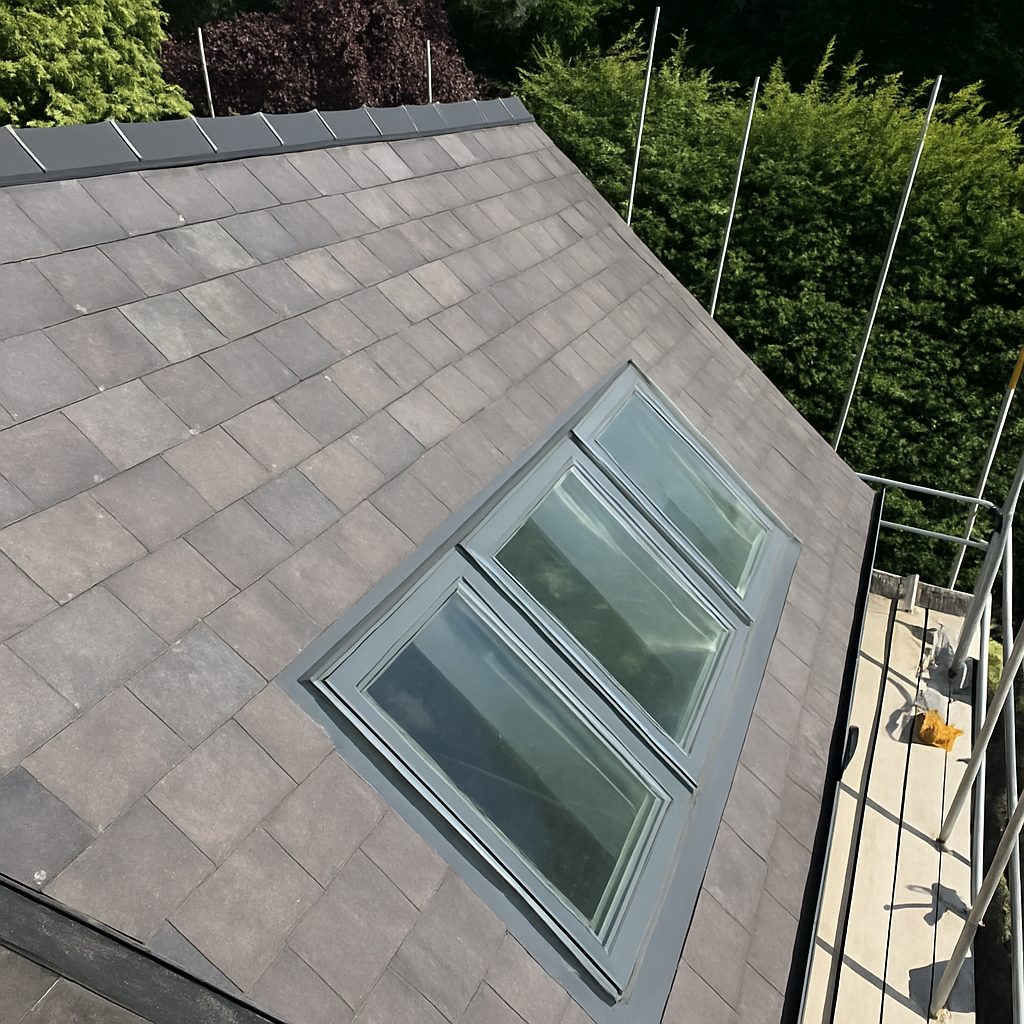
Weather delays are unavoidable. A good team leaves the roof watertight each night. We use tarps and temporary flashings when needed. I remember a job near Hellesdon where a freak hailstorm blew in at 3 p.m. on a strip day. We had half the south pitch open. Within five minutes, we had secured tarps under the top battens and weighted the edges with battens and sandbags. The house stayed dry, and we lost only a morning resetting. That is the difference preparation makes.

Cost ranges and what drives them
People want a straight answer about cost. Roofs resist exact numbers without a survey, but ranges help. For a typical semi-detached in Norwich with a simple duo-pitch roof, a full replacement in concrete interlocking tiles often falls between £6,500 and £11,000 including scaffold, materials, labour, ventilation upgrades, and waste. Clay tiles raise that to roughly £9,000 to £15,000 depending on tile choice and roof complexity. Natural slate can start around £14,000 and climb steeply with size and details. Bungalows cost differently due to easier access but larger plan areas. Dormers, valleys, complex hips, and extensive leadwork push figures up. Rot repairs and structural changes are variable and priced once uncovered.
Prices have moved in recent years with material costs and labour availability. Lead prices in particular wobble. The cheapest quote on the table may omit the very items that prevent callbacks. If one quote is thousands less but excludes dry ridge, eaves trays, or proper lead thickness, you will pay later. Money spent on the right detail, at the weakest points of a roof, is the best value.
Warranties that mean something
Two pieces of paper matter. One is a workmanship warranty from your roofer. The other is a building control certificate. Manufacturer warranties on tiles and membranes are real, but they typically cover product defects, not installation. If your ridge blows off because nails were undersized, the tile brand will not write a cheque. Choose a firm that has been around long enough to stand behind their promise. Also look for insurance-backed guarantees offered through trade schemes. If a company goes out of business, you still have a path to remedy. Norwich & Norfolk Roofers and other established roofers in Norfolk often carry these protections because they know the local market expects it.
Key steps, from your side
Think of your role as setting up the stage so the team can do their best work.
- Clear the loft in the areas under the roof slopes to be replaced, or at least cover stored items to keep dust off. Discuss access: parking space for a skip and deliveries, neighbour notices, and any vulnerable garden features to protect. Confirm details in writing: materials, ventilation approach, leadwork, ridge and verge systems, waste removal, and certification method. Ask for a daily update during the job. Five minutes with the foreman keeps everyone aligned. Hold the final payment until you have the certificate, warranty, and a walk-through with any snagging resolved.
Common pitfalls and how to avoid them
Most problems I am called to fix on relatively new roofs trace back to two sources: corners cut on ventilation and poor detailing at junctions. You can choose a premium tile and still end up with condensation in the loft if the airflow is not designed. The visual cues are subtle at first, a light sheen on nail points, then drips at cold snaps. Insist on eaves ventilation and a clear path above insulation. Where insulation blocks the eaves, baffles maintain the air channel.
Junctions deserve respect. Chimneys need proper throating and back gutters in lead that accommodates movement. Abutments should have stepped flashings, not a smear of mortar that will crack within a season. Valleys deserve either well-formed lead or a robust GRP trough with correct laps and support boards. Verge tiles secured with clips and screws, or dry verge units properly aligned, stand up better to crosswinds. Mortar-only verges look clean on day one, then begin to fissure along the gable with the first winter movement.
The temptation to overlay new tiles over old battens to save money is another slow-burn problem. Old battens often look sound but have lost strength and appropriate gauge. They do not hold modern nails as they should, and their spacing rarely matches a new tile gauge. A good reroof takes the structure back to sound timber, then rebuilds with the correct layers. The extra skip of waste is worth the certainty.
The aftercare that protects your investment
A new roof is not a set-and-forget item, even if it goes quiet for years. Keep gutters clear, especially on homes under trees in Eaton and Thorpe. Check for birds nesting under tiles at eaves in spring. From ground level, scan for slipped tiles after strong winds. Look at ridge lines for any lifted clips and at verges for gaps. Binoculars help. In the loft, peek twice a year for damp smells or drops on nail tips. If anything looks off, call the installer early. Small tweaks cost little when caught early.
If you add solar panels, tell your roofer before installation. The roof fixings for PV rails should be coordinated with batten lines and underlay sealing collars. We often work with PV installers to pre-fit bracket locations on a new roof so the warranty and weatherproofing stay intact. Retrofitting is fine with care, but random bracket penetrations without proper seals are a common source of surprise drips.
A note on sustainability and reuse
Roofing generates waste, but a thoughtful job reduces it. Many clay tiles and natural slates can be reclaimed for repairs or outbuildings. Lead is almost entirely recyclable. Discuss recycling options with your contractor. Breathable membranes and dry ridge systems extend roof life by preventing moisture buildup and reducing crack-prone mortar joints, which lowers overall lifecycle impact. When possible, we salvage enough sound tiles for a porch or a shed roof, which keeps character consistent on period properties.
Adding insulation at the same time improves comfort and cuts energy bills. If the loft is accessible and you do not use it for storage, consider increasing to the recommended depth. Just make sure ventilation remains clear at the eaves. For storage, raised loft platforms keep your boxes above the insulation without compressing it.
When the weather turns and how pros respond
Norfolk throws curveballs. Offshore winds bring sudden gusts, and cloudbursts can dump inches in an hour. Professional crews plan for this by stripping in sections that can be made watertight the same day, keeping tarps and fixings on hand, and sequencing work so vulnerable areas like valleys and chimneys are made secure early. If a day opens cloudy with a chance of showers, we adjust. It is not about bravado, it is about judgement from hundreds of days watching the sky. A small delay keeps your home dry and your investment safe.
The value of local experience
Some details are only obvious if you have worked on the roofs around here. The flint and brick gables of coastal villages flex differently than solid brick terraces in the city. The fetch over the Broads accelerates winds that find every weakness on a west-facing verge. The shade lines cast by tall chimneys on narrow streets foster moss in predictable crescents that hold moisture against laps. When you hire roofers in Norfolk who have climbed these houses, you buy that pattern recognition. It shows up in the small choices that later feel like a stroke of luck, like an extra clip near a chimney or a decision to move a vent tile two courses up to dodge snow slippage.
Norwich & Norfolk Roofers and other established firms carry that knowledge as muscle memory. They can tell you when a clay tile suits a street’s look and when a concrete tile will spare you hidden structural upgrades. They know which suppliers deliver consistent batches and which lead codes are in stock this month. More importantly, they answer the phone a year later if something needs adjusting.
Final thoughts from the scaffolding
A roof replacement is one of those projects you do a few times in a lifetime, if that. It is worth doing properly. The right materials only matter if they are part of a whole system installed with care. The best price is the one that includes the details that keep water out and air moving. Your role is to choose a team that communicates clearly, sets expectations, and stands behind the job.
Walk the process with them. Ask about the survey findings. Confirm the plan for ventilation, leadwork, and ridges. Prepare your home for a few noisy days. Keep an eye on the weather together. Then enjoy the quiet that returns when the last ridge cap clicks into place and the scaffold comes down. A good roof is the part of your house you forget, which is exactly as it should be.